
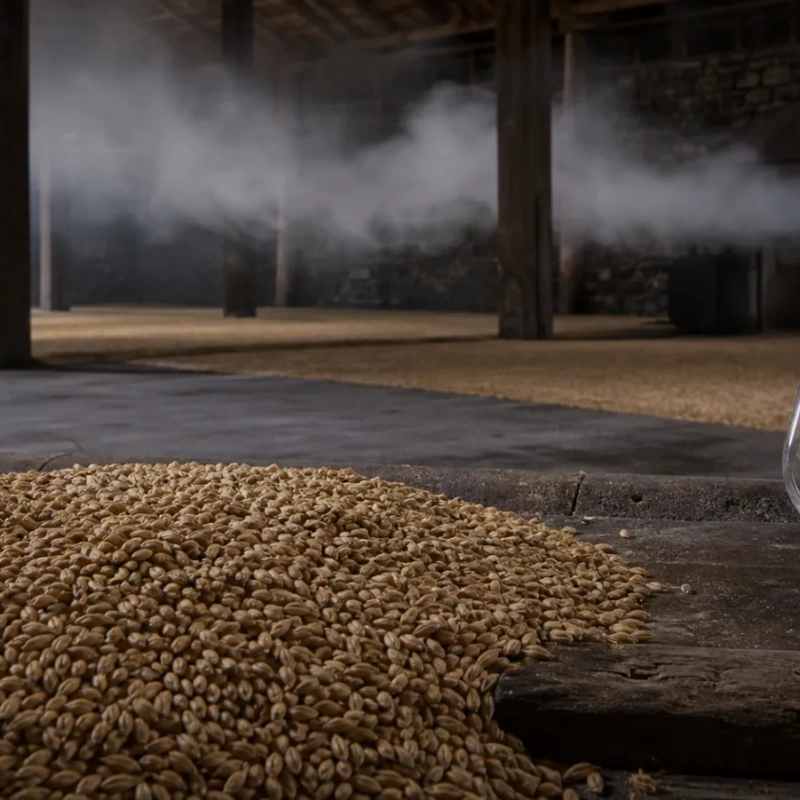
How peat smoke reaches the malt
Peated whisky begins with a practical fuel and flavour interaction. When peat smoke passes through damp malt during kilning, compounds from the smoke adhere to the grain and can survive fermentation, distillation, maturation, dilution, and bottling in changing proportions. The result may suggest hearth ash, seaweed, medicine, earth, smoked food, tar, flowers, or fruit rather than one generic “smoke” note.
What phenol numbers measure
Phenol figures are frequently quoted in parts per million, but the number needs a location in the process. A measurement for malt before mashing is not the same as a measurement in new make spirit or mature whisky. Still shape, cut points, fermentation, and cask time influence which compounds continue to the glass, so a larger malt specification does not guarantee a proportionally smokier experience.
Place is context, not proof
Place matters, but not as a magical flavour stamp. Peat composition varies with vegetation and geology, while malting location, smoke density, duration, and moisture affect uptake. Distilleries can also buy malt from large maltsters. An island address may shape history and supply decisions, yet geography alone does not prove how a particular batch was peated.
Maturation reshapes smoke
Maturation transforms smoke rather than simply reducing it. Refill casks may leave distillate character exposed; active oak can add vanilla, spice, tannin, or sweetness; wine-seasoned casks can introduce dried fruit and acidity. Oxidation and time change balance. Age therefore describes duration, not a predictable smoke scale.
A careful way to compare bottles
When comparing bottles, start below the highest intensity. Use small pours at similar strength, smell at a distance, and allow time after adding water. Separate smoke quality from alcohol heat and oak bitterness. A whisky can be intensely peated yet balanced, or lightly smoky but disjointed.
Peat is a production variable with measurable chemistry and wide sensory expression. Numbers, regions, and cask descriptions are useful clues only when their context is clear. The best guide combines verified production information with careful tasting rather than repeating a league table of supposed smokiness.
This guide separates regulated or documented facts from sensory shorthand. Rules differ between markets and can change. Product descriptions are not medical advice, and individual sensory impressions are not universal.
